



Actaea rubra
Ranunculaceae
Red Baneberry
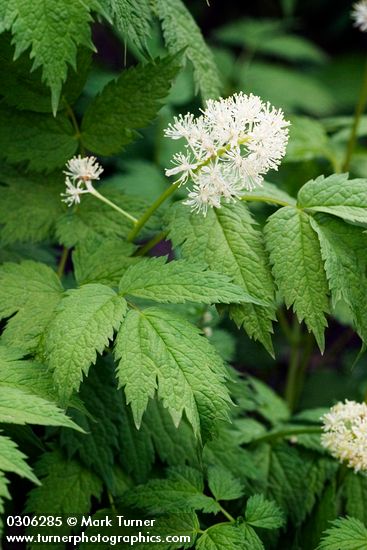
Erect to upright. Stems may be branched near top. Leaves on lower stem 1–4, about 2 ft. long including long petiole, divided into 3 delicate maple-like sections lobed again, toothed; upper leaves smaller. Inflorescence at stem end a bottlebrush head of small white flowers. Flower petals fall shortly after opening. Berries glossy red, in clusters appearing in July. Occasional plant with white berries. Grows in deep soil pockets in conifer or mixed forests, streambanks, below timberline. Berries toxic, not eaten by any animals.
- Rarity: Locally Common
- Flowering Time: Early Summer
- Flower Form: Petals 5, Completely Free, Regular Shape, Ovary Su
- Life Cycle: Perennial
- Height: 1–3 feet
- Habitat: East-side Forest, West-side Forest
- Found In: Crater Lake NP, Mt. Rainier NP, N Cascades NP, Olympic NP, Siskiyous, Steens, West Gorge
- Native: Yes
- Also Known As: Western Baneberry
