


Asteraceae
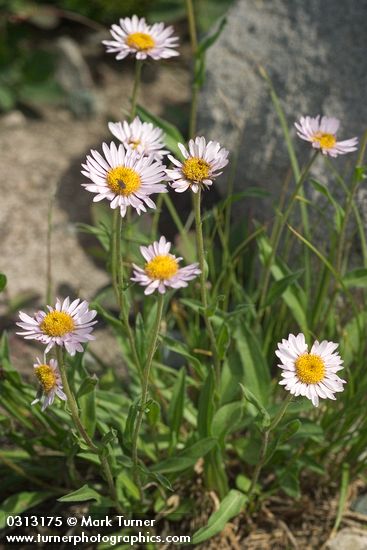
Erigeron peregrinus
Wandering Daisy
Clump. Leaves lance- to spoon-shaped, hairless or sparsely hairy. Lower leaves with petioles; few upper stem leaves smaller, clasping. Flower head single on unbranched stem. Ray flowers 30–105, white, purple, or rose. Grows in bogs, wet meadows, or subalpine, alpine talus and openings. Grows on mountains at mid- to high elevations. Var. callianthemus, peregrine fleabane, has hairless entire leaves, deep rose-purple flowers in cups very dense with glands. Var. peregrinus, wandering daisy, found only at high elevations in Coast Range, has toothed leaves soft with short hairs, flower cup bracts not glandular.
- Rarity: Uncommon
- Flowering Time: All Summer
- Life Cycle: Perennial
- Height: 4--18 inches
- Habitat: West-Side Forest, East-Side Forest, Bog/Fen/Wetland, Subalpine, Alpine
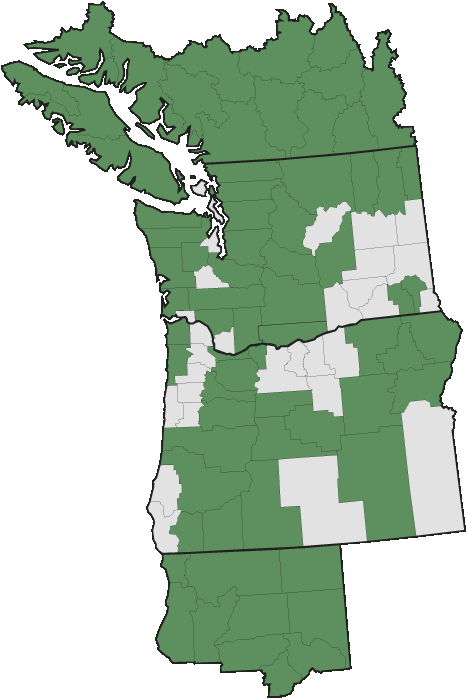
- Found In: Olympic Np, Mt. Rainier Np, Wallowas, Steens, West Gorge, Crater Lake Np, N Cascades Np
- Native: Yes
More Information:
- Common synonyms: peregrine fleabane
- More Photos
- USDA Plants Database
- CalPhotos
- OregonFlora
- E-Flora BC